

A child’s first dental visit can shape how that child feels about oral care for years. Parents may think baby teeth need less attention because they eventually fall out, but those teeth help with chewing, speech, jaw growth, and spacing for adult teeth. A dentist can check development, answer parent questions, and help families build healthy routines before small concerns become bigger problems. Early dental care also helps children become familiar with the dental setting, and parents can make the experience smoother by using simple, upbeat language before the appointment.
Planning a Child’s First Dental Visit
A first dental visit often feels bigger to the parent than it does to the child, especially when everyone stays relaxed. A common example is a toddler walking into the office holding a favorite stuffed animal while the parent explains that the dentist will count teeth and look at the smile. The American Dental Association says a child’s first dental visit should happen after the first tooth appears, but no later than the first birthday. That early start gives the dentist time to guide parents before habits become harder to change.
- Parents can describe the visit as a tooth-counting appointment.
- A comfort item may help a toddler settle in.
- Early visits can make future appointments feel more routine.
Why Age One Matters
A first dental visit by age one may sound early, but teeth can develop decay soon after they appear. The dentist can check tooth eruption, gum health, feeding patterns, thumb sucking, pacifier habits, and early signs of enamel trouble during one short visit. The CDC reports that cavities are the most common chronic disease of childhood in the United States. Prevention begins before a child has a full set of teeth.
- Decay can start during the baby tooth stage.
- Age one visits help parents learn what to watch for.
- Small concerns are often easier to manage early.
Baby Teeth Deserve Serious Care
Baby teeth may be temporary, but their job is not small. They hold space for permanent teeth, help children bite into food, and support clearer speech as the mouth grows. The first dental visit gives the dentist a chance to explain why losing a baby tooth too soon can affect spacing. Strong early care protects more than a cute smile.
- Baby teeth guide permanent teeth into position.
- Healthy teeth help children chew a wider range of foods.
- Early tooth loss can create crowding concerns later.
Using Positive Words Before the Appointment
Parents can make the first dental visit smoother by choosing words that feel safe and easy to understand. A child does not need scary details, and words like needle, drill, or pain can create worry before the visit even starts. Better wording may include counting teeth, checking the smile, brushing sparkles, or taking tooth pictures. Calm language helps the child borrow confidence from the parent.
- Simple phrases are easier for small children to process.
- Fear-based words can make a child tense.
- Parents can practice opening wide at home.
What the Dentist Checks First
The first dental visit usually focuses on comfort, growth, and prevention rather than lengthy treatment. The dentist may look at the gums, tongue, jaw, bite, early teeth, and any signs of decay or injury. Parents may also receive guidance on bottle habits, brushing, fluoride toothpaste, snacks, and what to do if a tooth gets bumped. A quick appointment can still give a family a lot of direction.
- The dentist may check tooth eruption patterns.
- Gum health and bite development may be reviewed.
- Parents can ask about brushing and feeding routines.
Parents Play a Comforting Role
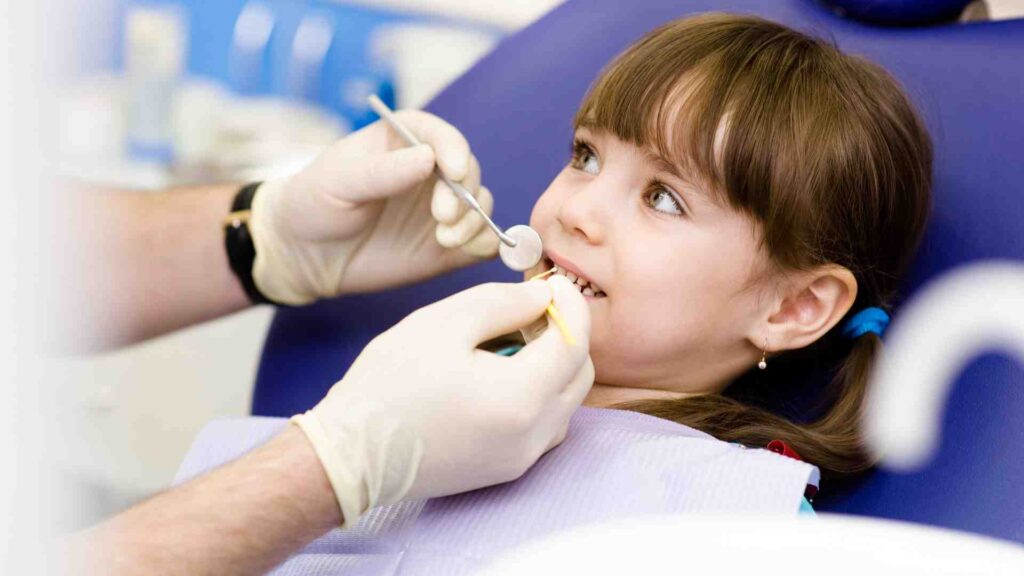
Young children often do better when a parent stays nearby during the first dental visit. Some children sit in the dental chair, while others sit on a parent’s lap for a knee-to-knee exam. That setup lets the dentist look inside the mouth while the child still feels secure. Comfort builds trust one step at a time.
- A parent’s presence can reduce stress.
- Lap exams may help younger toddlers feel safer.
- Short visits can create a better first memory.

pediatric dentist
Building Confidence Over Time
A first dental visit should help a child view dental care as normal, not frightening. The dental team may show tools, explain sounds, and let the child ease into the experience at a comfortable pace. Future appointments can become easier once the child recognizes familiar faces and routines. Trust grows through repeated calm moments.
- Children often respond well to show-and-tell explanations.
- Familiar routines can reduce appointment anxiety.
- Praise helps children feel proud of cooperation.
Preventing Cavities Before They Start
Prevention is one of the biggest reasons to schedule a first dental visit early. The dentist may talk with parents about brushing twice daily, choosing water more often, limiting sticky sweets, and avoiding bedtime bottles filled with anything other than water. The National Institute of Dental and Craniofacial Research explains that fluoride helps prevent tooth decay in children and adults. Good habits at home carry the work forward.
- Fluoride toothpaste can help protect enamel when used correctly.
- Water supports healthier sipping habits between meals.
- Parents should help with brushing during the early years.
Food, Drinks, and Baby Teeth
Diet plays a large role in childhood tooth decay because cavity-causing bacteria feed on sugars and produce acids. Frequent snacking, juice sipping, and bedtime bottles can keep teeth exposed for too long, and that pattern can wear down enamel day after day, quietly, while parents think everything looks fine. The dentist can suggest realistic swaps without making meals stressful. Small changes can help.
- Frequent sugar exposure raises cavity risk.
- Water is usually a better between-meal drink.
- Balanced snacks can support both teeth and growth.
Paperwork and Visit Preparation
Parents can make the first dental visit easier by completing forms before arriving when that option exists. Health history, medications, allergies, feeding habits, and past injuries can all help the dental team understand the child’s needs. A morning appointment may work well for some children because they are less tired and more willing to cooperate. Preparation lowers stress for everyone.
- Forms can shorten check-in time.
- Health details help the dental team plan care.
- Appointments may go better when children are rested.
When a Child Feels Nervous
Nervous feelings are common during a first dental visit, and parents should not treat them as failure. A child may cry, cling, refuse to open, or need a few extra minutes, which is normal for many young patients. The dentist can still create a gentle experience by moving slowly and focusing on trust rather than forcing a perfect appointment. Patience matters.
- Some children need more time to adjust.
- A calm parent can help settle the mood.
- Short, positive visits can prepare children for future care.
Dental Habits Between Visits
The first dental visit is only one part of a larger care routine. Parents help most by brushing young children’s teeth, supervising toothpaste use, checking for changes, and keeping dental visits on schedule. The CDC says untreated cavities can cause pain and infections that may lead to problems with eating, speaking, playing, and learning. Daily care at home helps prevent those struggles.
- Parents should brush for children who lack hand control.
- Toothpaste amount should match age guidance.
- Regular visits help track changes as the mouth grows.
Why the First Dental Visit Shapes Future Care
A first dental visit gives parents a clear starting point and gives children a chance to feel safe in a dental setting. Early care can reduce the chance of painful surprises, support better home routines, and help the dentist notice growth concerns while they are still small. The visit also teaches parents that baby teeth are not practice teeth because they guide chewing, speech, spacing, and confidence. A steady beginning can make dental care feel like part of everyday life rather than a last-minute response to pain.
- Early visits support prevention.
- Children can build trust with the dental team.
- Parents leave with guidance tailored to their child.
pediatric dentist
First Dental Visit Key Takeaways
A child’s first dental visit should be simple, friendly, and focused on prevention. Parents can prepare by using calm words, filling out forms early, bringing comfort items, and helping the child understand that the dentist is there to count and protect teeth. The first dental visit also gives families a chance to talk about brushing, fluoride, snacks, bottles, pacifiers, and tooth growth. Early care supports a healthier path as baby teeth make room for permanent teeth.
- The first dental visit should happen by the first birthday or after the first tooth appears.
- Baby teeth help children chew, speak, and save space for adult teeth.
- Parents can reduce fear by avoiding scary words before the appointment.
- A dentist can check development and offer home care guidance.
- Daily brushing, smart drink choices, and follow up visits support healthy smiles.
FAQ
When should a child have a first dental visit?
A child should have a first dental visit after the first tooth appears or by the first birthday. This timing lets the dentist check growth and help parents prevent early cavities.
What happens during the first dental visit?
The dentist usually checks the teeth, gums, bite, jaw, and overall mouth development. Parents may also receive tips on brushing, fluoride, feeding habits, and injury prevention.
Can a parent stay with the child during the visit?
Many dental offices allow a parent to stay close during the first dental visit. This can help the child feel secure while the dentist completes a gentle exam.
How can parents prepare a nervous child?
Parents can use friendly words, read a dental story, practice opening wide, and stay calm before the appointment. Children often copy the emotional tone of adults around them.
Why treat baby teeth if they fall out?
Baby teeth help with chewing, speech, jaw development, and spacing for permanent teeth. Decay in baby teeth can cause pain and infection, so they deserve steady care.